
Let’s face it: No one wants to have to go running for a drip bucket every time it rains. Not only is having to stay on top of the weather forecast annoying and impractical, but that one small drip symbolizes a larger roofing issue – and we all know that roofing issues mean an investment of time and money.
In an effort to save you that investment, we’ve compiled a list of The 10 Most Common Causes of Roof Leaks. We’ll tell you what they look like, why they happen, and how to fix them.
Whether your roof is two years old or twenty keep this list handy. You never know when it could mean the difference between doing a quick repair or a major remodel.
1. Cracked, Loose, or Poorly Installed Flashing
Flashing is the metal or membrane detail used where your roof changes direction or meets another surface. You will find flashing around chimneys, walls, dormers, skylights, roof valleys, plumbing penetrations, and certain edges. It exists because shingles alone are not designed to seal every joint and transition on a roof.
What it looks like
- Water stains near a chimney, wall, skylight, or ceiling corner
- Rusty, bent, lifted, cracked, or missing metal flashing visible from the ground
- Recurring leaks that show up after wind-driven rain rather than every light shower
- Interior staining that appears several feet away from the actual roof entry point because water travels along framing
Why it happens
Flashing can fail because of age, corrosion, thermal movement, poor sealant use, improper step flashing, missing kick-out flashing, nail pops, storm movement, or installation shortcuts. Industry inspection guidance describes flashing as a targeted waterproofing detail in the areas of a roof most likely to leak. In 2026, the key update is that homeowners should not treat flashing as a simple caulk problem. Sealant may temporarily slow water, but a durable repair usually requires correcting the flashing system itself.
What to do
Photograph the stain, note when it appears, and call a roofing professional to inspect the transition area. Litespeed Construction can determine whether the repair requires new step flashing, counterflashing, apron flashing, kick-out flashing, underlayment repair, or surrounding shingle replacement.
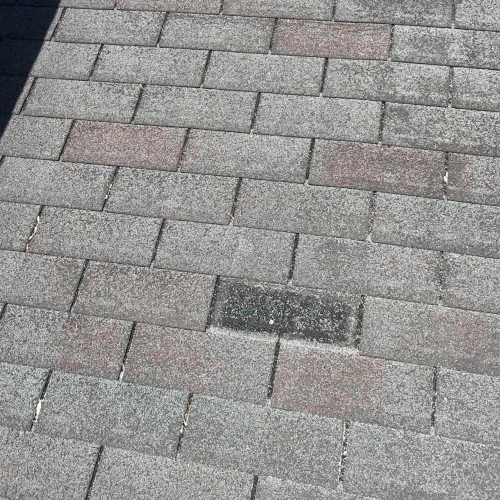
2. Missing, Lifted, Cracked, or Storm-Damaged Shingles
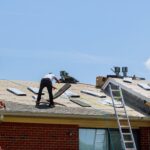
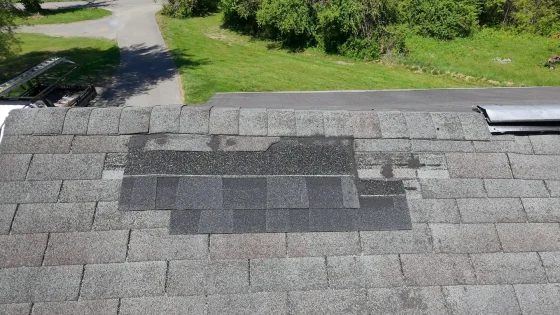
Asphalt shingles are the visible outer layer of many Knoxville roofs. When shingles are missing, lifted, creased, cracked, blistered, or no longer sealed, wind-driven rain can reach the underlayment and roof deck. FEMA severe-wind guidance warns that loose shingles and outdoor debris can become hazards during high winds, and Knoxville storms frequently bring gusty winds and heavy rain together.
What it looks like
- Shingles in the yard after a storm
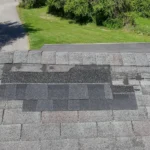
- Different-colored patches on the roof where shingles are missing
- Lifted edges, creased tabs, cracked shingles, or granule loss
- New leaks after a thunderstorm, wind event, or hail event
Why it happens
Common causes include storm wind, aging adhesive strips, nail placement errors, poor attic ventilation, tree limb impact, hail, thermal expansion, or a roof nearing the end of its service life. ARMA emphasizes that proper installation and ongoing maintenance are important to maximize the service life of asphalt roofing systems.
What to do
From the ground, document visible damage and avoid climbing onto the roof. If a storm caused the issue, save photos and dates for your records. A professional roof assessment can separate isolated shingle repair from broader storm damage or age-related roof failure.
3. Roof Valleys That Are Not Properly Sealed
A roof valley is where two roof planes meet and channel large volumes of water downward. Valleys are high-risk leak areas because they handle concentrated runoff from both roof slopes. In East Tennessee, where heavy rain can arrive quickly during thunderstorms, a poorly built valley can leak even if the surrounding shingles look normal.
What it looks like
- Wet spots that follow a ceiling line or roof seam
- Leaks during heavy rain but not light rain
- Debris collecting in a valley
- Damaged, buckled, or poorly aligned shingles along a valley
Why it happens
Valley leaks may come from missing leak barrier, improper underlayment overlap, open-valley metal deterioration, nails placed too close to the centerline, debris dams, or foot traffic damage. IBHS FORTIFIED roof guidance focuses heavily on better roof-deck sealing and edge details because wind-driven rain can enter through vulnerable roof areas when coverings are damaged or lifted.
What to do
Valley repair is not a good DIY project. A roofer needs to evaluate the underlayment, shingle cuts, fastener placement, valley metal, and surrounding roof deck. Litespeed Construction can inspect whether the valley needs targeted repair or replacement of a larger roof section.
4. Cracked Pipe Boots and Roof Vent Flashing
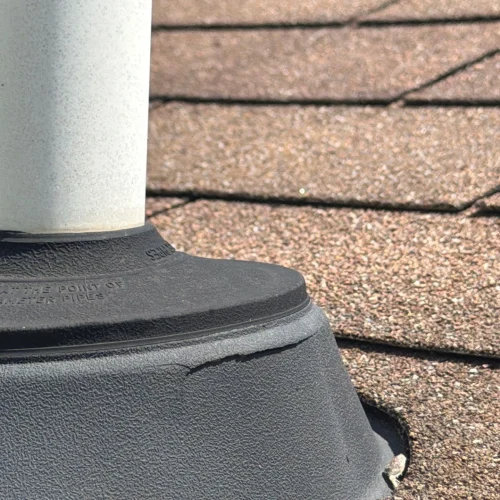
The original article called this “vent booting.” The clearer homeowner term is pipe boot or roof vent flashing. These are the rubber, neoprene, silicone, lead, or metal components that seal plumbing vent pipes and other penetrations through the roof.
What it looks like
- Dark stains near a bathroom, laundry room, kitchen, or plumbing wall
- Water marks around a ceiling penetration
- Cracked rubber around a roof pipe when viewed from the ground with binoculars
- Musty odor or damp insulation below the vent area
Why it happens
Rubber pipe boots deteriorate from UV exposure, heat, age, movement, and improper installation. Once the boot cracks or separates from the pipe, rain can enter around the penetration. Because this leak source is often small and localized, it is one of the better examples of why early inspection saves money.
What to do
A professional repair may involve replacing the boot, installing a retrofit boot, resealing the flashing correctly, and checking the nearby shingles and decking. Avoid simply smearing caulk over a cracked boot; that may not last and may hide ongoing damage.
5. Ice Dams, Freeze-Thaw Stress, and Cold-Weather Backups
Ice dams are less common in Knoxville than in northern states, but they should not be ignored. East Tennessee can still experience cold snaps, snow, refreezing, and shaded roof sections where meltwater backs up near eaves. More often, Knoxville homeowners see freeze-thaw stress, clogged gutter ice, or water trapped at low-slope transitions rather than classic deep-snow ice dams.
What it looks like
- Icicles or ice buildup at gutters and eaves
- Leaks after snow or freezing rain begins to melt
- Staining along exterior walls or ceiling edges
- Gutter sections pulled loose by ice weight
Why it happens
Ice-related leaks usually involve a combination of attic heat loss, poor ventilation, insufficient insulation, clogged gutters, and roof edge drainage problems. The 2026 update is to avoid overemphasizing ice dams as a top Knoxville problem while still explaining freeze-thaw risk honestly.
What to do
Do not chip ice off shingles with sharp tools. Instead, document the issue and schedule an inspection focused on attic insulation, ventilation, roof edge details, gutter drainage, and leak barrier placement. Preventing warm attic air from melting roof snow unevenly is often more important than treating ice after it forms.
6. Improperly Installed or Aging Skylights
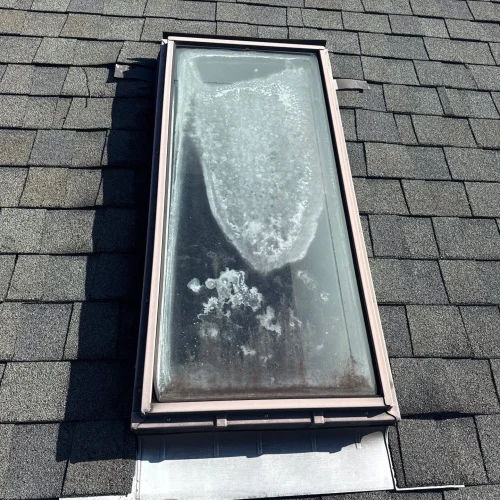
Skylights can add natural light, but they are also roof penetrations. Most skylight leaks are not caused by the glass itself. They often come from flashing, underlayment, curb installation, condensation, failed seals, or debris that prevents water from draining around the skylight.
What it looks like
- Water stains around the skylight opening
- Drips at the lower corners of the skylight
- Condensation between panes or fogging inside the unit
- Leaks that happen only during wind-driven rain
Why it happens
Skylight leaks can be caused by improper curb height, missing or misapplied step flashing, old gaskets, failed glazing seals, roof pitch incompatibility, or debris buildup. If the leak is near the top of the skylight, the source may be upslope flashing rather than the skylight frame itself.
What to do
Clear debris only if it can be done safely from the ground or a stable access point. For the actual leak diagnosis, have a roofer inspect the flashing kit, curb, seal, surrounding shingles, and interior moisture pattern.
7. Clogged Gutters, Poor Drainage, and Missing Kick-Out Flashing
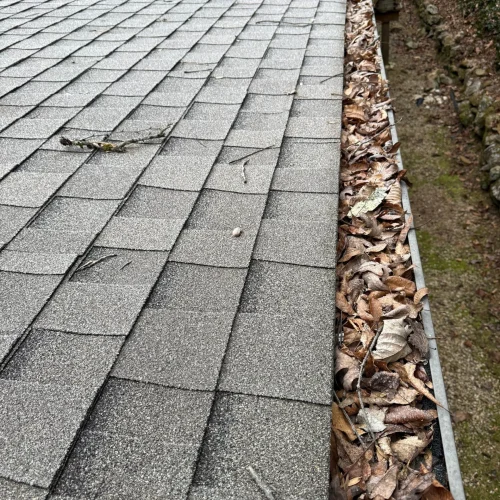
Gutters are not just accessories. They are part of the roof drainage system. When gutters clog, overflow, detach, or discharge water in the wrong place, water can back up under shingles, rot fascia, damage soffits, soak siding, and create foundation moisture problems.
What it looks like
- Water spilling over gutter edges during rain
- Leaves or debris visible in the gutter line
- Staining on fascia or siding below a roof edge
- Basement or crawlspace dampness after roof drainage overflows
- Rot near roof-to-wall intersections
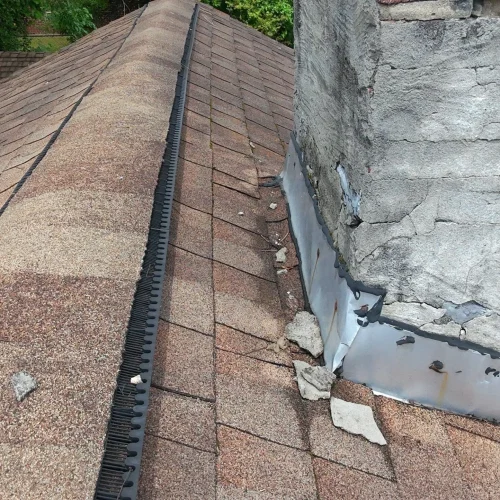
8. Chimney Cracks, Crown Damage, and Chimney Flashing Failure
Chimneys are one of the most common roof leak locations because they combine masonry, metal flashing, roof shingles, mortar joints, and a vertical wall exposed to rain. A leak near a chimney may come from the roof flashing, chimney crown, cap, mortar joints, brick absorption, or surrounding shingles.
What it looks like
- Ceiling stains or wall stains near the fireplace or chimney chase
- White staining, cracked mortar, or missing mortar on exterior brick
- Rust stains on flashing or the chimney cap
- Loose shingles or lifted flashing around the chimney
Why it happens
Mortar and masonry absorb water and deteriorate over time, especially through freeze-thaw cycles. Flashing also expands and contracts differently than masonry. If the original flashing was not properly stepped and counterflashed into the chimney, water may enter behind it.
What to do
Chimney leaks often need both roofing and masonry evaluation. A roofer can inspect step flashing, counterflashing, shingles, and underlayment. A chimney professional may be needed for crown, cap, mortar, or flue issues. Do not assume a chimney leak is fixed just because sealant was applied around the base.
9. Attic Condensation, Poor Ventilation, and Moisture Buildup
Not every “roof leak” begins outside. Sometimes the roof is not leaking at all; moisture is forming inside the attic because warm, humid indoor air meets cooler roof surfaces. EPA moisture guidance emphasizes controlling moisture and drying wet materials because mold can grow when moisture problems remain unresolved.
What it looks like
- Musty odor in the attic
- Mold or mildew on roof decking or insulation
- Damp insulation without an obvious exterior leak path
- Rusty roofing nails visible from inside the attic
- Recurring stains during temperature swings rather than during rain only
Why it happens
Attic condensation may come from insufficient ventilation, blocked soffit vents, bath fans exhausting into the attic, poor air sealing, inadequate insulation, or HVAC ducts leaking conditioned air into the attic. Knoxville’s humid summers and freeze-thaw winter periods make attic moisture control important year-round.
What to do
A good inspection should separate roof leaks from condensation. That may require checking soffit intake, ridge or exhaust ventilation, bathroom fan termination, insulation depth, roof deck staining, and moisture patterns. Treating mold without correcting moisture sources is not a long-term fix.
10. Foot Traffic, DIY Repairs, and Unsafe Roof Access
Foot traffic remains a real cause of roof damage, but the more important 2026 homeowner message is safety. Walking on a roof can crack brittle shingles, break seals, damage flashing, disturb granules, or turn a small issue into a larger one. It can also cause serious injury.
What it looks like
- Scuffed shingles or missing granules along walking paths
- Cracked tabs near satellite dishes, holiday lights, chimneys, or vents
- Leaks after unrelated service work on the roof
- Damage around areas where people commonly step or place ladders
Why it happens
Roofing materials are not designed for unnecessary traffic, especially when they are hot, cold, wet, aged, or storm-damaged. OSHA and NIOSH fall-prevention resources emphasize that roofing work involves serious fall hazards, which is why professional crews use training and fall-protection practices.
What to do
Stay off the roof whenever possible. Use ground-level photos, attic observations, and professional inspection instead. Litespeed Construction can inspect suspected damage without asking homeowners to take unnecessary risks.
When a Roof Leak Is an Emergency
Call for roofing help quickly if water is actively entering the home, electrical fixtures are wet, ceiling drywall is sagging, insulation is soaked, a tree limb punctured the roof, shingles are missing after a storm, or water is entering around a chimney, skylight, or wall intersection. The goal is to stop active water intrusion, document the damage, and prevent secondary problems such as mold, rot, insulation damage, and structural deterioration.
What Knoxville Homeowners Should Do Before Calling a Roofer
- Take photos of interior stains, exterior damage, missing shingles, and any storm debris.
- Write down the date and time you first noticed the leak and whether it followed wind, hail, heavy rain, or freezing weather.
- Move belongings away from the leak and place a container under active drips if safe.
- Do not climb onto a wet, steep, icy, or storm-damaged roof.
- Check the attic only if it is safe and accessible; avoid stepping through ceiling drywall.
- Verify that any contractor you hire is properly licensed/qualified for the size and scope of the project through Tennessee contractor resources.
Why Call Litespeed Construction for Roof Leak Repair in Knoxville?
Roof leaks can be deceptive. The water stain on your ceiling may be several feet from the entry point, and the visible problem may not be the root cause. Litespeed Construction helps Knoxville-area homeowners identify whether the leak is coming from flashing, shingles, valleys, pipe boots, skylights, gutters, chimney details, attic condensation, or storm damage.
A professional roof assessment can also help you decide whether the best next step is a small repair, storm damage documentation, roof maintenance, ventilation correction, or a larger replacement conversation. If you see a leak, missing shingles, water stains, or storm damage, call Litespeed Construction for a roof inspection before the next rain exposes the problem again.